SCAGO

Sickle cell disease (SCD) is a genetic disease that affects hemoglobin in red blood cells. Hemoglobin is a protein that carries oxygen to all organs in the body.
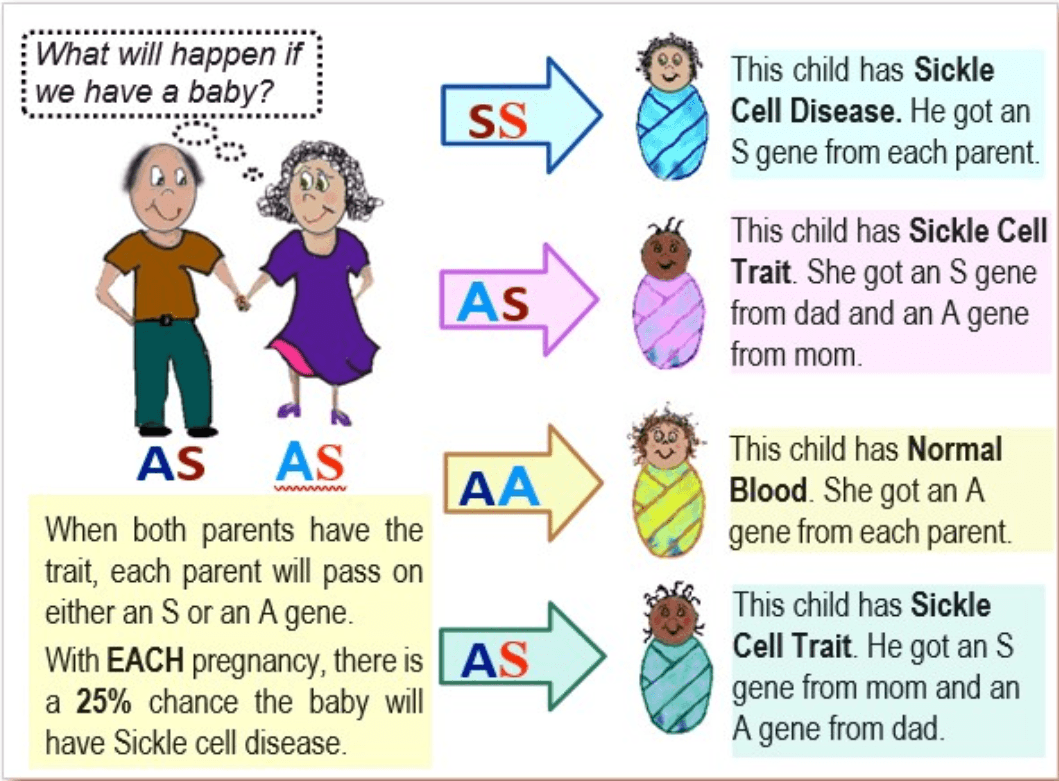
Sickle cell disease is a genetic disease that is passed on to a child from both the mother and the father of the child. Most parents who have a child with Sickle Cell Disease don’t know they carry the gene for the disease because they have the trait – they have a normal hemoglobin gene, and a gene associated with sickle cell disease. Parents who carry a single gene associated with Sickle Cell Disease have no symptoms. If a child gets a Sickle Cell Disease gene for each parent, they will have the disease. Sickle cell disease is not infectious; you cannot catch it from someone.
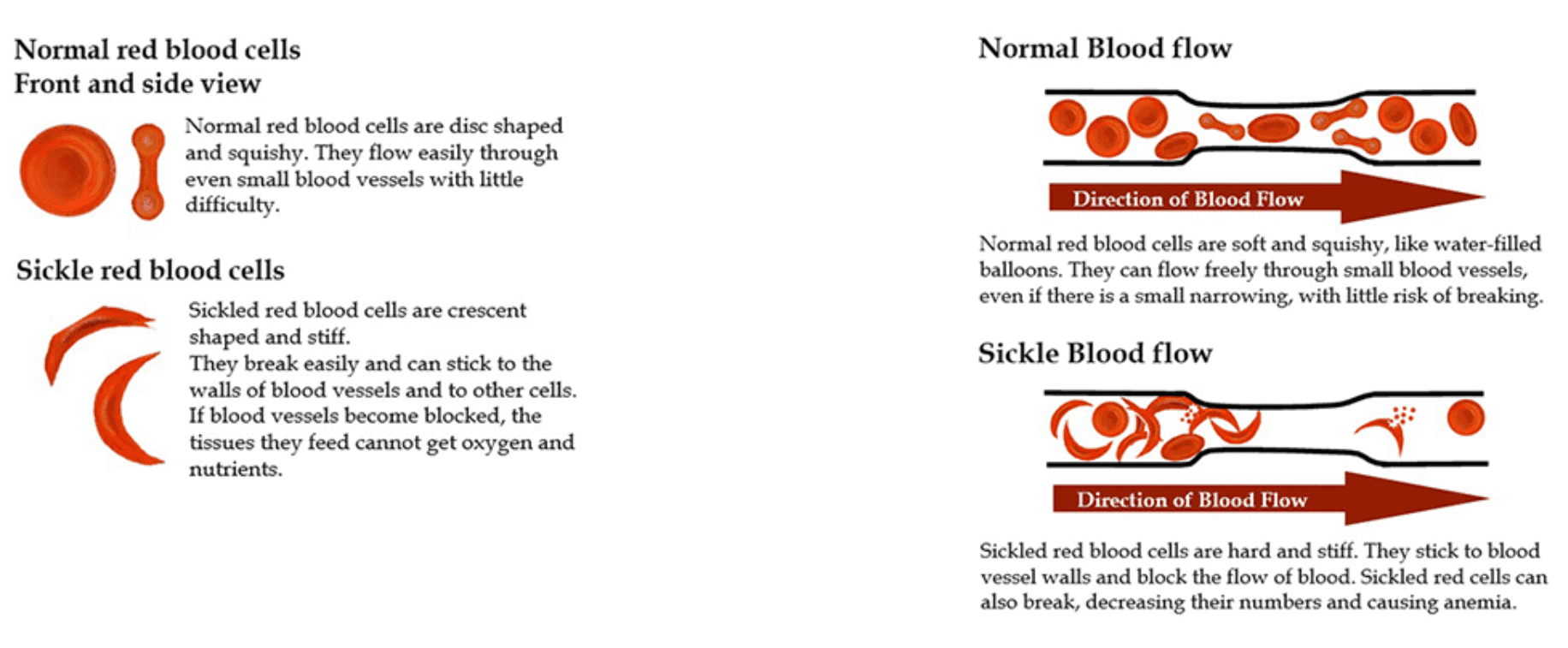
Sickle Cell Disease causes red blood cells to become stiff and crescent-shaped. These sickle cells are fragile; they break easily as they flow through blood vessels. They do not survive as long as normal red blood cells. People with sickle cell disease are anemic. This means they may look pale and feel weak. Sickled red cells stick to each other and to blood vessel walls. This can block the flow of blood to different parts of the body.
When blood vessels become blocked, pain and tissue injury can occur. Some tissues may become permanently damaged.
There are different types of sickle cell disease. This depends on which genes have been passed from the parents to the child. The most common scenario is when both parents have sickle cell trait (AS). With each pregnancy, each parent will either pass the A or the S gene to his or her child.
The most common types of sickle cell disease are:
Sickle cell anemia or SS disease where a child inherits an S gene from each parent.
Sickle-hemoglobin C or SC disease where a child inherits an S gene from one parent and a C gene from the other
Sickle-thalassemia disease is where a child inherits an S gene from one parent and a thalassemia gene from the other.
Parents with a trait usually have no symptoms. You will only know you carry a gene associated with sickle cell disease if you do a simple blood test. Your family doctor can help you with this.
What are some of the problems in sickle cell disease?
Many of these problems are preventable so it is very important to keep your follow-up appointments with your family doctor and hematologist.
Anemia – children with Sickle Cell Disease have a low red blood count. This makes them tired easily.
Jaundice – a yellow color usually seen in the white of the eyes. This is usually a mild and common problem.
Infections can occur more often in children This is because their spleen (an organ in the tummy that filters blood to remove germs) does not work as well. If your child has a fever, it could be a sign of a serious problem. You should contact your doctor for advice.
Acute splenic sequestration – this happens when red blood cells become trapped in the spleen. The spleen can become very large. If too much blood becomes trapped, an urgent blood transfusion may be needed.
Pain is most often felt in the bones and joints but can happen in any part of the It happens when sickled red cells block blood flow to the tissues. This prevents oxygen and food from getting to the tissues. Young children may get dactylitis which is a painful swelling of the hands and feet.
Acute chest syndrome – this is similar to pneumonia (infection in the lungs). It can be treated in a hospital.
Peeing often – Children with Sickle Cell Disease drink a lot of water as it makes them feel better. They also make more urine (pee) so they need to go to the toilet often.
Stroke – Symptoms of a stroke include, weakness in the limbs, slurring of speech, or being These can be signs that blood flow to the brain is affected. This is a serious problem that needs to be treated quickly.
At present, there is only one cure for sickle cell disease – bone marrow or stem cell transplantation. This is a potentially dangerous procedure that requires identifying a well-matched donor and is usually only performed in children. There is a great deal of progress being made in gene therapy, however, and if successful this will allow for cure in a much larger number of patients than are currently offered bone marrow or stem cell transplantation.
The first thing you can do is to make healthy lifestyle changes for you and your child:
Eat a balanced diet with lots of fruit and Your doctor may also prescribe folic acid (a vitamin), which helps to make new red blood cells.
Drink lots of water – good hydration is important.
Keep warm.
Keep your doctor’s appointments.
Articles